Bambu Lab P2S — Workplace Safety & Compliance Document Pack (Digital Download)
Machine-Specific Safety Documentation for the Bambu Lab P2S
The Bambu Lab P2S looks like a safe, enclosed desktop printer out of the box — and for PLA, it mostly is. But the P2S is designed to print engineering-grade filaments that its built-in carbon filter cannot adequately handle. ABS and ASA emit styrene and acrylonitrile. Nylon (PA/PA6-CF) emits caprolactam. Polycarbonate emits BPA. TPU emits isocyanate precursors — a respiratory sensitizer. The P2S's integrated carbon filter saturates in 50–100 hours when printing these materials, and the machine provides no filter saturation indicator. An operator printing ABS with a depleted filter has no warning that they're now breathing unfiltered styrene at concentrations that may exceed OSHA permissible exposure limits. Standard FDM safety documents treat all filaments the same. This one doesn't.
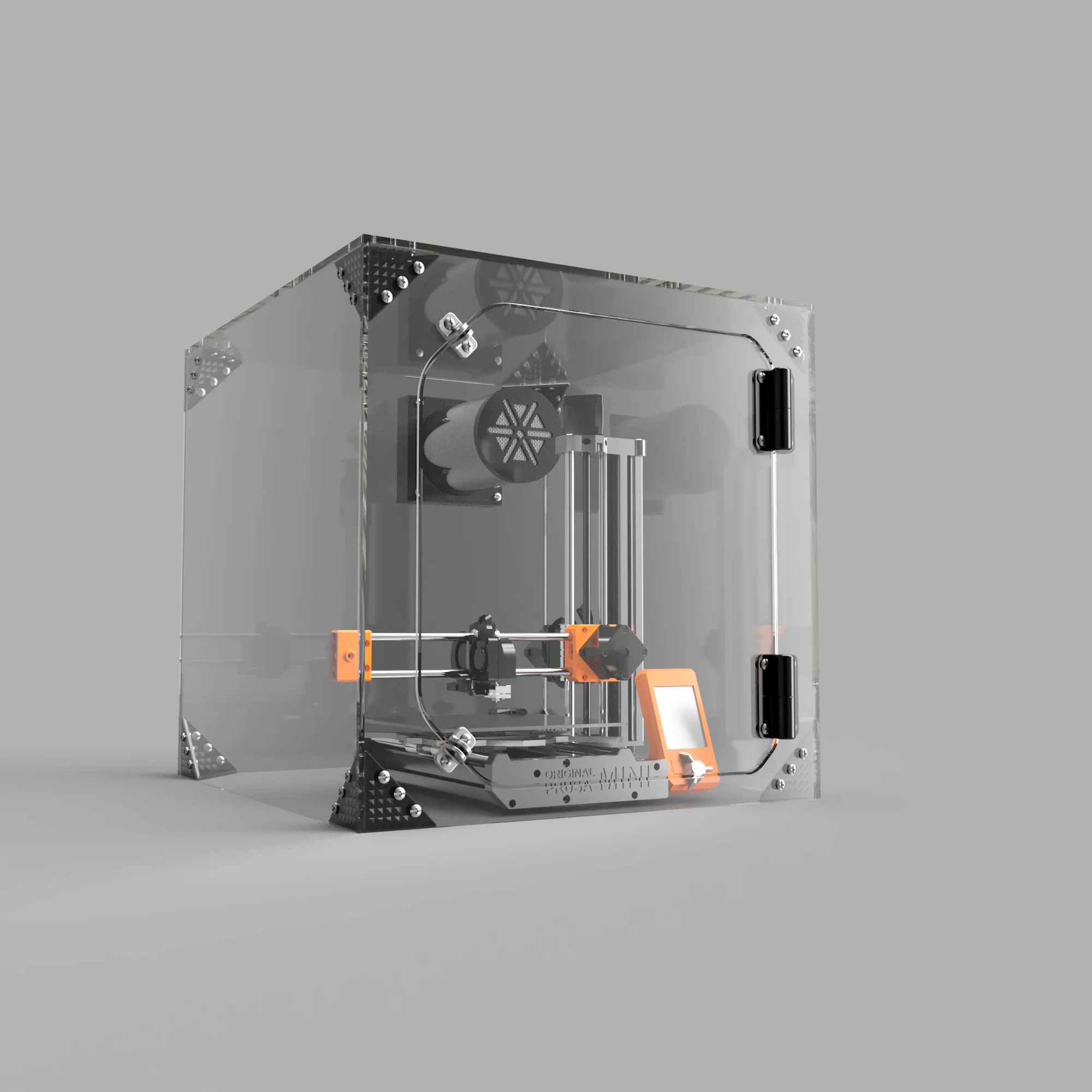
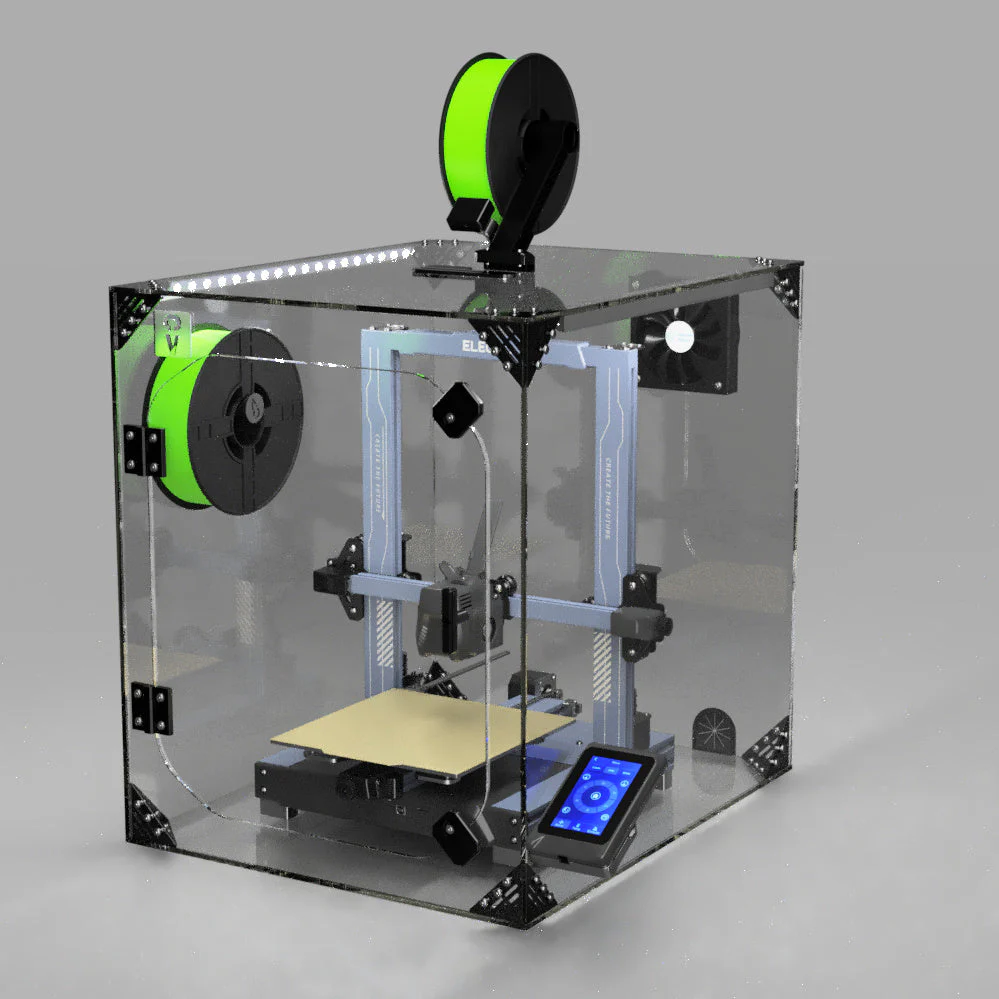
This is a machine-specific document pack written exclusively for the Bambu Lab P2S — built around a three-tier filament hazard classification system (Low / Medium-High / High) that maps each filament type to specific PPE, ventilation, and filter management requirements. Pre-filled with P2S specifications throughout.
Developed by Clearview Plastics, the industry leader in 3D printer enclosures and workplace safety solutions since 2008.
What's Included (5 Documents)
1. Safety & Compliance Package
Your core safety document — filament-tiered hazard assessment, engineering controls, PPE requirements, and emergency procedures written specifically for the P2S. Built around a three-tier filament hazard classification system that determines the safety protocol for every print job:
🟢 LOW RISK — PLA, PETG: Ultra-fine particle emissions only. Built-in carbon filter adequate. Room ventilation at 2–4 ACH sufficient. No respiratory protection required beyond well-ventilated space. Standard operating conditions.
🟡 MEDIUM-HIGH RISK — ABS, ASA, PA-CF (carbon fiber blends): Styrene (OSHA PEL 100 ppm, ACGIH TLV 20 ppm), acrylonitrile (OSHA PEL 2 ppm — suspected carcinogen), and carbon fiber particulate. Built-in filter insufficient — saturates in 50–100 hours with no indicator. Supplemental enclosure with HEPA + activated carbon filtration required, OR dedicated exhaust ventilation at 4–6 ACH. N95 respirator minimum; P100 recommended for extended prints.
🔴 HIGH RISK — PA (Nylon), PA6-CF, PC (Polycarbonate), TPU: Caprolactam (PA — OSHA PEL 5 mg/m³, causes respiratory and skin irritation), BPA (PC — endocrine disruptor, no established OSHA PEL), isocyanate precursors (TPU — respiratory sensitizer, irreversible sensitization possible, OSHA ceiling 0.02 ppm). Built-in filter grossly insufficient. Supplemental enclosure with multi-stage filtration mandatory, OR dedicated exhaust ventilation at 6–8 ACH. P100 respirator required for TPU regardless of ventilation. Medical surveillance recommended for regular PC/TPU operators.
Includes thermal hazard assessment (300°C nozzle, 110°C bed), crush/pinch hazards from CoreXY gantry at 500mm/s with 20,000mm/s² acceleration, electrical hazards, fire risk assessment by filament type, emergency procedures, and compliance certification sign-off table with per-filament-tier documentation.
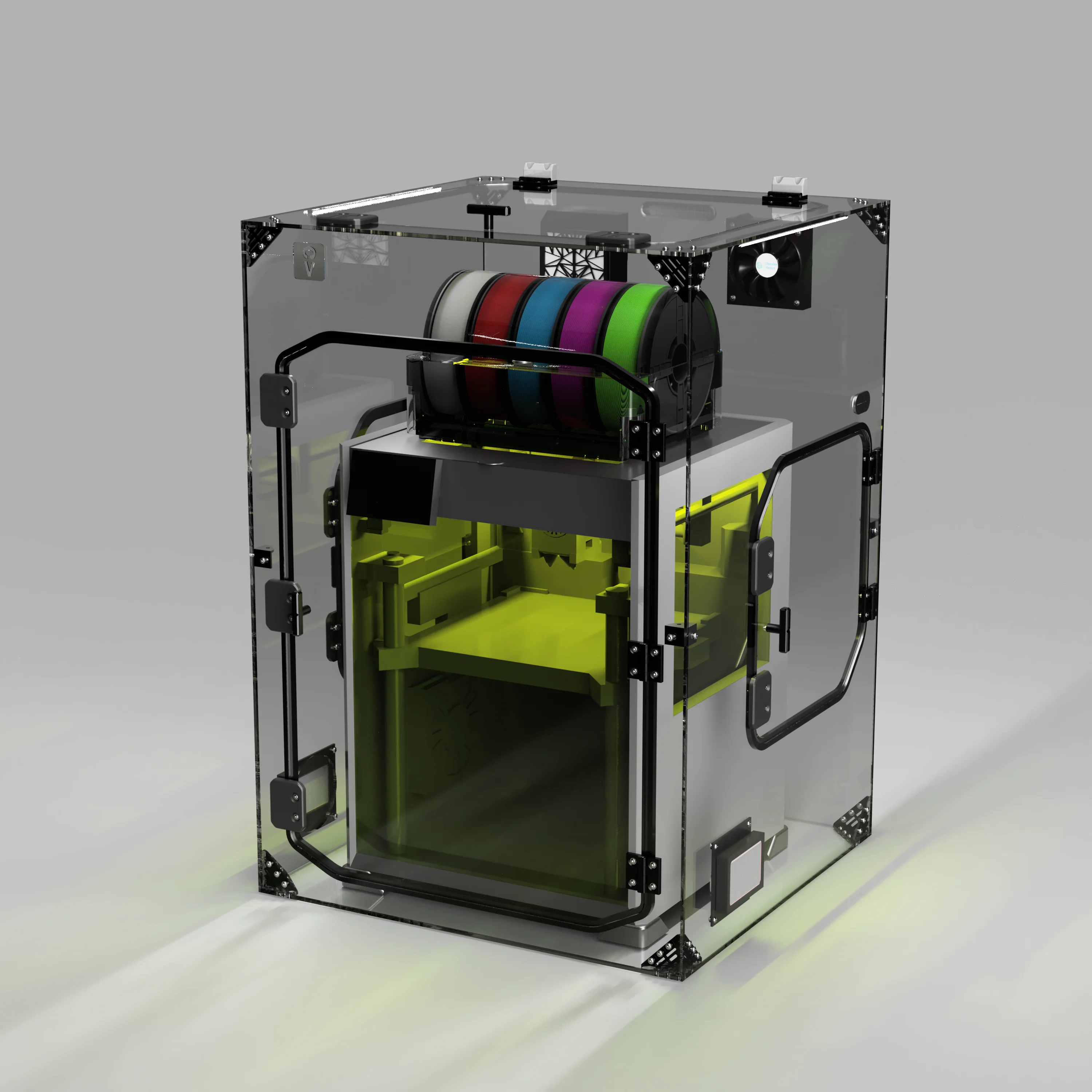
⚠ The Built-In Filter Has Limits the Machine Doesn't Tell You About: The P2S's integrated carbon filter is sized for PLA and PETG. When printing ABS, ASA, Nylon, PC, or TPU, the filter saturates in 50–100 hours — and there is no saturation warning or indicator on the machine. Once saturated, emissions pass through unfiltered. These documents include filter replacement schedules by filament type, supplemental filtration specifications, a Facility Risk Assessment Form with a step-by-step decision tree for determining whether your current setup is adequate for each filament tier, and Clearview supplemental enclosure integration guidance.
2. Ventilation & Exhaust Guide
Filament-tiered ventilation system design for the P2S. Includes emission profile tables showing VOC type, concentration range, and particle counts for each filament tier — demonstrating why the built-in filter is adequate for Tier 1 (PLA/PETG) but insufficient for Tiers 2 and 3. Specifies ventilation requirements by tier: LOW at 2–4 ACH with built-in filter, MEDIUM-HIGH at 4–6 ACH with supplemental filtration or exhaust, HIGH at 6–8 ACH with dedicated exhaust (TPU requires local exhaust capture regardless of room ACH). Includes supplemental enclosure integration specifications (Clearview enclosure + HEPA/carbon filter stack), standalone duct extraction setup for facilities without enclosures, CFM calculation formulas with worked examples, make-up air balancing, and carbon filter replacement interval tables by filament type and print hours.
3. Room Readiness Guide
Pre-installation checklist for the P2S — organized by filament tier so facilities printing only PLA/PETG have a streamlined checklist, while facilities planning to use engineering filaments get the full ventilation and filtration infrastructure requirements. Electrical planning for standard 15A circuit (the P2S's power draw is manageable on residential circuits, but shared-circuit load calculations are included for multi-printer setups). Machine footprint and working clearance. Ventilation infrastructure assessment — existing HVAC adequacy by tier, supplemental duct routing if needed. Network connectivity for Bambu Lab ecosystem. Filament storage requirements (PA and TPU are moisture-sensitive — dry box specifications included). Includes a Facility Risk Assessment Form — a step-by-step decision tree that walks facilities through their filament plans, current ventilation, filter status, and PPE inventory to determine readiness for each tier.
4. Maintenance & Inspection Guide
Ongoing compliance documentation with filament-tier-aware inspection schedules. Critical item: Carbon filter tracking. Includes a filter hour log with replacement thresholds by filament type (PLA/PETG: replace every 500+ hours; ABS/ASA: every 50–100 hours; PA/PC/TPU: every 30–50 hours or after each extended print session). Nozzle and hotend condition (hardened steel nozzle recommended for carbon fiber filaments), heated bed calibration, chamber seal integrity, filament path and runout sensor, CoreXY belt tension and gantry alignment. Supplemental enclosure filter inspection (if installed). Ventilation system performance verification. Emergency stop function test. Includes a 6-month fillable inspection log with filament-tier tracking columns.
5. Visitor & Student Safety Orientation
Quick-reference safety guide for non-operators — designed for schools, makerspaces, and shared facilities where visitors or students access the machine area. Covers machine overview, the filament hazard tier system in plain language ("just because the printer is enclosed doesn't mean it's safe for all materials"), three-tier safety zone system, primary hazards by filament type, color-coded filament tier reference (green/yellow/red), do/don't rules, emergency procedures, and acknowledgment sign-off. Includes a posted quick-reference card showing which filaments require which PPE — designed so any operator can check before starting a print. Print and post at the workstation.
Bambu Lab P2S — Key Specifications Covered
- Build Volume: 256×256×256mm (10.1"×10.1"×10.1")
- Max Nozzle Temp: 300°C / Max Bed Temp: 110°C
- Print Speed / Acceleration: 500mm/s / 20,000mm/s²
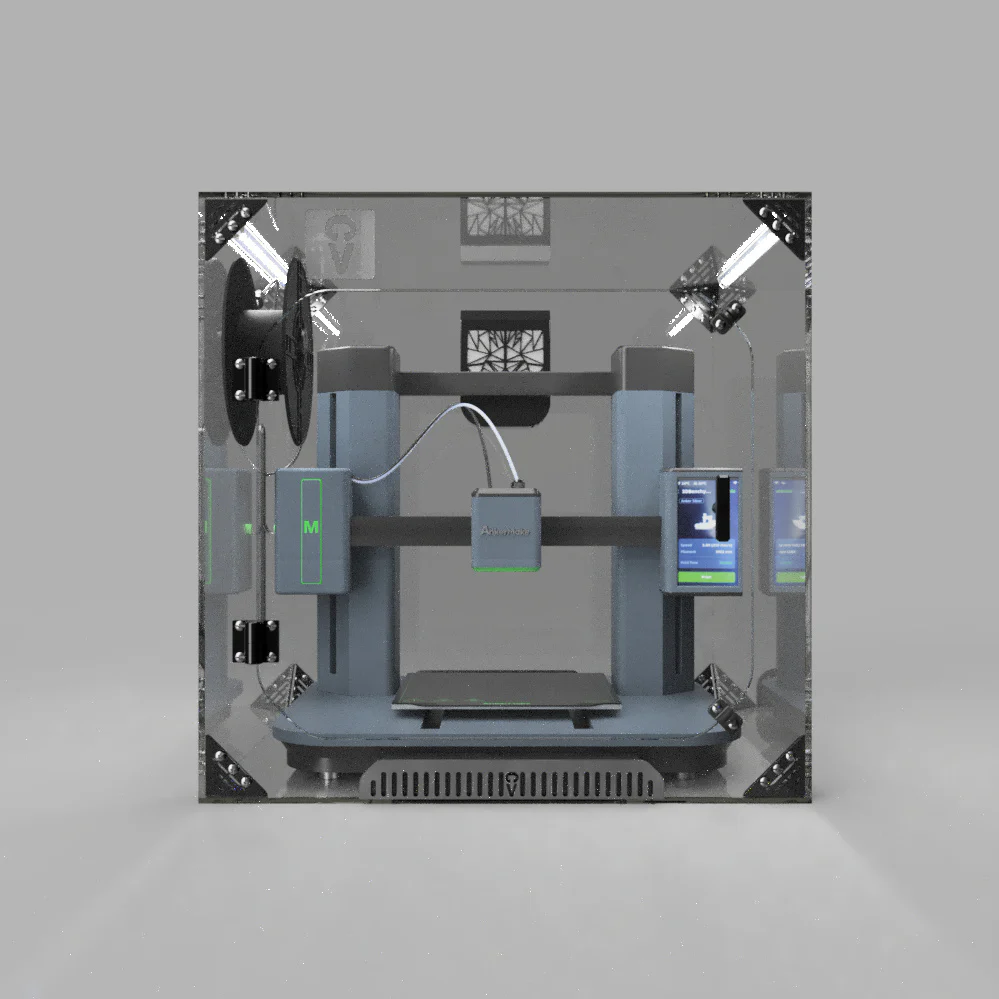
- Enclosure: Fully enclosed with integrated carbon filter (filter limitations documented by filament type)
- Power: Standard outlet — shared-circuit load calculations included for multi-printer setups
- Filament: PLA, PETG, ABS, ASA, PA, PA6-CF, PC, TPU, PVA, PPA-CF, PET-CF (1.75mm)
- Built-In Filter Saturation: ~500+ hours (PLA/PETG), ~50–100 hours (ABS/ASA), ~30–50 hours (PA/PC/TPU)
Regulatory Standards Referenced
- OSHA 29 CFR 1910.132/.133/.134 (PPE — General, Eye/Face, Respiratory Protection)
- OSHA 29 CFR 1910.1000 (Air Contaminants — Styrene, Acrylonitrile, Caprolactam PELs)
- OSHA 29 CFR 1910.1045 (Acrylonitrile — Suspected Carcinogen Standard)
- OSHA 29 CFR 1910.147 (Lockout/Tagout — LOTO)
- OSHA 29 CFR 1910.303–307 (Electrical Safety)
- ANSI/UL 2904 (3D Printer Emission Testing — VOC/UFP Measurement Standard)
- NIOSH 2024-103 (3D Printing Workplace Safety — Engineering Controls and PPE Guidance)
- NIOSH UFP Exposure Guidance (Ultra-Fine Particle Monitoring)
- Cal/OSHA Title 8 CCR §3203 (Injury & Illness Prevention Program)
- NFPA 101 (Life Safety Code — Fire Prevention)
Who This Is For
- Any business, school, or makerspace that has purchased or is planning to purchase a Bambu Lab P2S
- Facilities printing engineering filaments (ABS, ASA, Nylon, Polycarbonate, TPU) on the P2S — where the built-in filter is insufficient and supplemental controls are required
- Educational institutions deploying the P2S in engineering labs, maker labs, or STEM programs — especially those planning to expand beyond PLA/PETG
- Multi-printer production environments running P2S units in print farms where cumulative emissions from multiple machines compound exposure risk
- Facilities preparing for EHS audit, insurance review, or safety inspection with enclosed FDM equipment using engineering-grade filaments
How It Works
All five documents are delivered as editable .docx files with Bambu Lab P2S specifications pre-filled throughout. The filament hazard tier system is integrated across all documents — so your safety protocols, ventilation requirements, PPE matrix, filter schedules, and visitor orientation all reference the same consistent tier classification. Add your facility name, serial number, installation date, safety officer designation, filament inventory, and any facility-specific parameters in the clearly marked fields. Print, file, and present to your EHS department, safety auditor, school administration, or facility inspector.
Why Filament-Tiered Documentation Matters for the P2S
The P2S's built-in enclosure and carbon filter create a false sense of security. For PLA and PETG, the enclosure works as intended. But the moment an operator loads ABS, Nylon, Polycarbonate, or TPU, the safety equation changes fundamentally — and the machine doesn't tell you. There's no filter saturation indicator. No emission warning. No automatic ventilation adjustment. The P2S treats all filaments the same way mechanically, but the chemical exposure profiles are vastly different. Styrene from ABS is an OSHA-regulated air contaminant. Acrylonitrile from ASA is a suspected carcinogen. Isocyanate precursors from TPU cause irreversible respiratory sensitization. Generic FDM safety documents either ignore filament-specific hazards entirely or mention them in passing. This document pack makes filament selection the first decision in every safety protocol — because on the P2S, the filament you load determines whether the built-in safety features are sufficient or dangerously inadequate.
Important Disclaimer
These documents are provided as an informational safety framework and do not constitute legal advice, regulatory certification, or a guarantee of compliance. Employers must verify that all recommendations align with current federal, state, and local occupational safety regulations. See full disclaimer within each document.
Product Information
Product Information
Shipping & Returns
Shipping & Returns
Description
Machine-Specific Safety Documentation for the Bambu Lab P2S
The Bambu Lab P2S looks like a safe, enclosed desktop printer out of the box — and for PLA, it mostly is. But the P2S is designed to print engineering-grade filaments that its built-in carbon filter cannot adequately handle. ABS and ASA emit styrene and acrylonitrile. Nylon (PA/PA6-CF) emits caprolactam. Polycarbonate emits BPA. TPU emits isocyanate precursors — a respiratory sensitizer. The P2S's integrated carbon filter saturates in 50–100 hours when printing these materials, and the machine provides no filter saturation indicator. An operator printing ABS with a depleted filter has no warning that they're now breathing unfiltered styrene at concentrations that may exceed OSHA permissible exposure limits. Standard FDM safety documents treat all filaments the same. This one doesn't.
This is a machine-specific document pack written exclusively for the Bambu Lab P2S — built around a three-tier filament hazard classification system (Low / Medium-High / High) that maps each filament type to specific PPE, ventilation, and filter management requirements. Pre-filled with P2S specifications throughout.
Developed by Clearview Plastics, the industry leader in 3D printer enclosures and workplace safety solutions since 2008.
What's Included (5 Documents)
1. Safety & Compliance Package
Your core safety document — filament-tiered hazard assessment, engineering controls, PPE requirements, and emergency procedures written specifically for the P2S. Built around a three-tier filament hazard classification system that determines the safety protocol for every print job:
🟢 LOW RISK — PLA, PETG: Ultra-fine particle emissions only. Built-in carbon filter adequate. Room ventilation at 2–4 ACH sufficient. No respiratory protection required beyond well-ventilated space. Standard operating conditions.
🟡 MEDIUM-HIGH RISK — ABS, ASA, PA-CF (carbon fiber blends): Styrene (OSHA PEL 100 ppm, ACGIH TLV 20 ppm), acrylonitrile (OSHA PEL 2 ppm — suspected carcinogen), and carbon fiber particulate. Built-in filter insufficient — saturates in 50–100 hours with no indicator. Supplemental enclosure with HEPA + activated carbon filtration required, OR dedicated exhaust ventilation at 4–6 ACH. N95 respirator minimum; P100 recommended for extended prints.
🔴 HIGH RISK — PA (Nylon), PA6-CF, PC (Polycarbonate), TPU: Caprolactam (PA — OSHA PEL 5 mg/m³, causes respiratory and skin irritation), BPA (PC — endocrine disruptor, no established OSHA PEL), isocyanate precursors (TPU — respiratory sensitizer, irreversible sensitization possible, OSHA ceiling 0.02 ppm). Built-in filter grossly insufficient. Supplemental enclosure with multi-stage filtration mandatory, OR dedicated exhaust ventilation at 6–8 ACH. P100 respirator required for TPU regardless of ventilation. Medical surveillance recommended for regular PC/TPU operators.
Includes thermal hazard assessment (300°C nozzle, 110°C bed), crush/pinch hazards from CoreXY gantry at 500mm/s with 20,000mm/s² acceleration, electrical hazards, fire risk assessment by filament type, emergency procedures, and compliance certification sign-off table with per-filament-tier documentation.
⚠ The Built-In Filter Has Limits the Machine Doesn't Tell You About: The P2S's integrated carbon filter is sized for PLA and PETG. When printing ABS, ASA, Nylon, PC, or TPU, the filter saturates in 50–100 hours — and there is no saturation warning or indicator on the machine. Once saturated, emissions pass through unfiltered. These documents include filter replacement schedules by filament type, supplemental filtration specifications, a Facility Risk Assessment Form with a step-by-step decision tree for determining whether your current setup is adequate for each filament tier, and Clearview supplemental enclosure integration guidance.
2. Ventilation & Exhaust Guide
Filament-tiered ventilation system design for the P2S. Includes emission profile tables showing VOC type, concentration range, and particle counts for each filament tier — demonstrating why the built-in filter is adequate for Tier 1 (PLA/PETG) but insufficient for Tiers 2 and 3. Specifies ventilation requirements by tier: LOW at 2–4 ACH with built-in filter, MEDIUM-HIGH at 4–6 ACH with supplemental filtration or exhaust, HIGH at 6–8 ACH with dedicated exhaust (TPU requires local exhaust capture regardless of room ACH). Includes supplemental enclosure integration specifications (Clearview enclosure + HEPA/carbon filter stack), standalone duct extraction setup for facilities without enclosures, CFM calculation formulas with worked examples, make-up air balancing, and carbon filter replacement interval tables by filament type and print hours.
3. Room Readiness Guide
Pre-installation checklist for the P2S — organized by filament tier so facilities printing only PLA/PETG have a streamlined checklist, while facilities planning to use engineering filaments get the full ventilation and filtration infrastructure requirements. Electrical planning for standard 15A circuit (the P2S's power draw is manageable on residential circuits, but shared-circuit load calculations are included for multi-printer setups). Machine footprint and working clearance. Ventilation infrastructure assessment — existing HVAC adequacy by tier, supplemental duct routing if needed. Network connectivity for Bambu Lab ecosystem. Filament storage requirements (PA and TPU are moisture-sensitive — dry box specifications included). Includes a Facility Risk Assessment Form — a step-by-step decision tree that walks facilities through their filament plans, current ventilation, filter status, and PPE inventory to determine readiness for each tier.
4. Maintenance & Inspection Guide
Ongoing compliance documentation with filament-tier-aware inspection schedules. Critical item: Carbon filter tracking. Includes a filter hour log with replacement thresholds by filament type (PLA/PETG: replace every 500+ hours; ABS/ASA: every 50–100 hours; PA/PC/TPU: every 30–50 hours or after each extended print session). Nozzle and hotend condition (hardened steel nozzle recommended for carbon fiber filaments), heated bed calibration, chamber seal integrity, filament path and runout sensor, CoreXY belt tension and gantry alignment. Supplemental enclosure filter inspection (if installed). Ventilation system performance verification. Emergency stop function test. Includes a 6-month fillable inspection log with filament-tier tracking columns.
5. Visitor & Student Safety Orientation
Quick-reference safety guide for non-operators — designed for schools, makerspaces, and shared facilities where visitors or students access the machine area. Covers machine overview, the filament hazard tier system in plain language ("just because the printer is enclosed doesn't mean it's safe for all materials"), three-tier safety zone system, primary hazards by filament type, color-coded filament tier reference (green/yellow/red), do/don't rules, emergency procedures, and acknowledgment sign-off. Includes a posted quick-reference card showing which filaments require which PPE — designed so any operator can check before starting a print. Print and post at the workstation.
Bambu Lab P2S — Key Specifications Covered
- Build Volume: 256×256×256mm (10.1"×10.1"×10.1")
- Max Nozzle Temp: 300°C / Max Bed Temp: 110°C
- Print Speed / Acceleration: 500mm/s / 20,000mm/s²
- Enclosure: Fully enclosed with integrated carbon filter (filter limitations documented by filament type)
- Power: Standard outlet — shared-circuit load calculations included for multi-printer setups
- Filament: PLA, PETG, ABS, ASA, PA, PA6-CF, PC, TPU, PVA, PPA-CF, PET-CF (1.75mm)
- Built-In Filter Saturation: ~500+ hours (PLA/PETG), ~50–100 hours (ABS/ASA), ~30–50 hours (PA/PC/TPU)
Regulatory Standards Referenced
- OSHA 29 CFR 1910.132/.133/.134 (PPE — General, Eye/Face, Respiratory Protection)
- OSHA 29 CFR 1910.1000 (Air Contaminants — Styrene, Acrylonitrile, Caprolactam PELs)
- OSHA 29 CFR 1910.1045 (Acrylonitrile — Suspected Carcinogen Standard)
- OSHA 29 CFR 1910.147 (Lockout/Tagout — LOTO)
- OSHA 29 CFR 1910.303–307 (Electrical Safety)
- ANSI/UL 2904 (3D Printer Emission Testing — VOC/UFP Measurement Standard)
- NIOSH 2024-103 (3D Printing Workplace Safety — Engineering Controls and PPE Guidance)
- NIOSH UFP Exposure Guidance (Ultra-Fine Particle Monitoring)
- Cal/OSHA Title 8 CCR §3203 (Injury & Illness Prevention Program)
- NFPA 101 (Life Safety Code — Fire Prevention)
Who This Is For
- Any business, school, or makerspace that has purchased or is planning to purchase a Bambu Lab P2S
- Facilities printing engineering filaments (ABS, ASA, Nylon, Polycarbonate, TPU) on the P2S — where the built-in filter is insufficient and supplemental controls are required
- Educational institutions deploying the P2S in engineering labs, maker labs, or STEM programs — especially those planning to expand beyond PLA/PETG
- Multi-printer production environments running P2S units in print farms where cumulative emissions from multiple machines compound exposure risk
- Facilities preparing for EHS audit, insurance review, or safety inspection with enclosed FDM equipment using engineering-grade filaments
How It Works
All five documents are delivered as editable .docx files with Bambu Lab P2S specifications pre-filled throughout. The filament hazard tier system is integrated across all documents — so your safety protocols, ventilation requirements, PPE matrix, filter schedules, and visitor orientation all reference the same consistent tier classification. Add your facility name, serial number, installation date, safety officer designation, filament inventory, and any facility-specific parameters in the clearly marked fields. Print, file, and present to your EHS department, safety auditor, school administration, or facility inspector.
Why Filament-Tiered Documentation Matters for the P2S
The P2S's built-in enclosure and carbon filter create a false sense of security. For PLA and PETG, the enclosure works as intended. But the moment an operator loads ABS, Nylon, Polycarbonate, or TPU, the safety equation changes fundamentally — and the machine doesn't tell you. There's no filter saturation indicator. No emission warning. No automatic ventilation adjustment. The P2S treats all filaments the same way mechanically, but the chemical exposure profiles are vastly different. Styrene from ABS is an OSHA-regulated air contaminant. Acrylonitrile from ASA is a suspected carcinogen. Isocyanate precursors from TPU cause irreversible respiratory sensitization. Generic FDM safety documents either ignore filament-specific hazards entirely or mention them in passing. This document pack makes filament selection the first decision in every safety protocol — because on the P2S, the filament you load determines whether the built-in safety features are sufficient or dangerously inadequate.
Important Disclaimer
These documents are provided as an informational safety framework and do not constitute legal advice, regulatory certification, or a guarantee of compliance. Employers must verify that all recommendations align with current federal, state, and local occupational safety regulations. See full disclaimer within each document.